

With the development of remote working, more and more companies are conducting international negotiations, webinars and conferences in an online format. In such conditions, translation at online meetings plays a special role, which ensures full communication between participants.
However, online interpreting has its own specifics that are important to consider when organizing an event. In this article, we will analyze the key nuances, work formats, and recommendations for choosing an interpreter for Zoom, Microsoft Teams, and other platforms.
What is translation in online meetings
Online meeting interpreting is an interpreting service in which an interpreter is connected to the event remotely and works in real time. Depending on the format, it can be simultaneous interpretation online or consecutive interpretation online.
This format is widely used for:
- international negotiations
- online conferences
- webinars and training events
- partner meetings
An interpreter for an online meeting can be in any city or country, making the service more accessible and flexible.
Features of simultaneous interpreting in Zoom and Teams
Synchronous online interpreting is one of the most complex types of oral interpretation, in which the interpreter conveys speech virtually simultaneously with the speaker, without pauses. In the context of online meetings, this requires not only high qualifications from the specialist, but also competent technical organization of the process.
The Zoom platform provides built-in language channel functionality, allowing participants to select the desired interpretation language and listen to it concurrently with the original speech. When configured correctly, this maximizes the online format's similarity to classic simultaneous interpretation at offline events. However, it is important to assign an interpreter in the system beforehand, test the channel functionality, and ensure participants understand how to switch between languages.
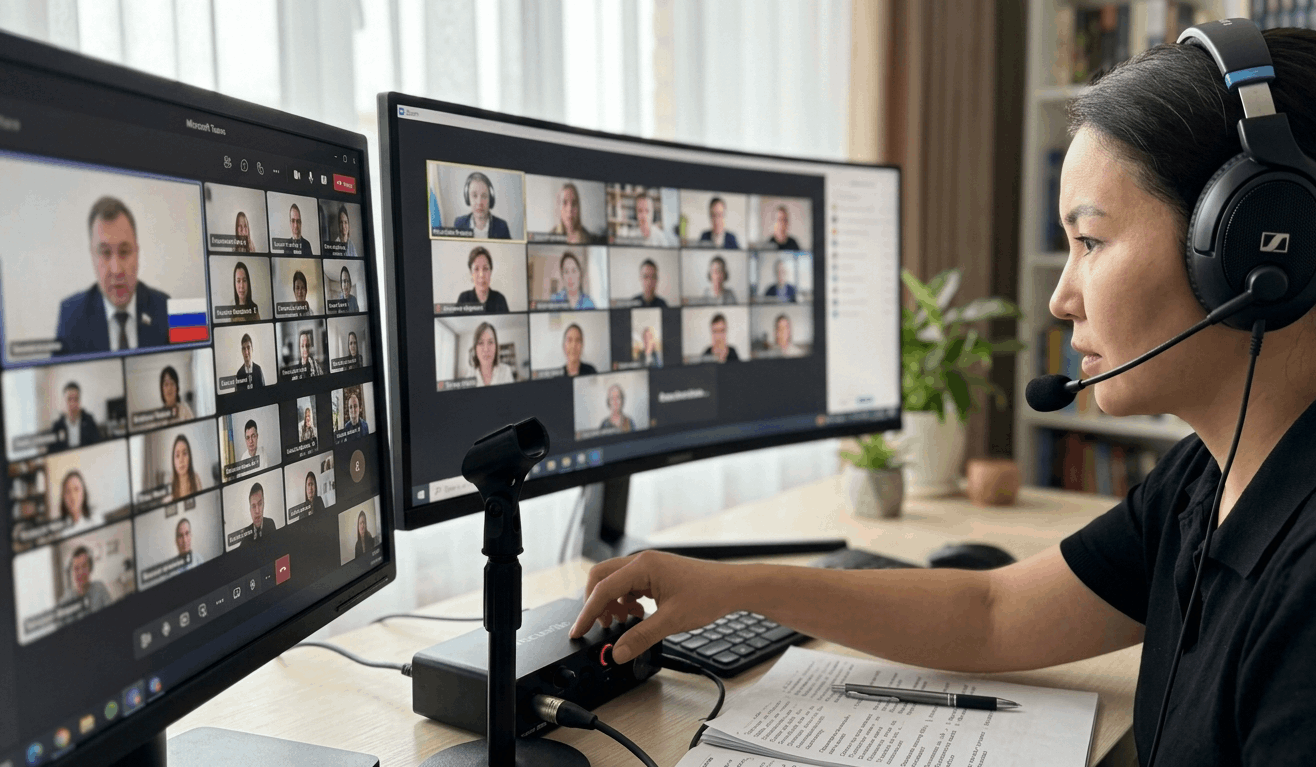
For high-quality simultaneous interpretation in Zoom or Microsoft Teams, a stable internet connection and clear audio are critical. Any delays, interruptions, or distortions can disrupt synchronicity and make information difficult to understand. This is precisely why using a professional headset and conducting preliminary technical testing is recommended.
In Microsoft Teams, real-time translation features are less obvious and may require additional settings or the use of third-party solutions. In such cases, it is especially important to plan the technical workflow, role distribution, and participant interaction format in advance.
Thus, successful online simultaneous interpreting depends not only on the interpreter's experience but also on the event's preparation level. The more thoroughly the technical and organizational details are worked out, the higher the quality of communication and the comfort of the participants.
Features of consecutive online translation
Online consecutive interpreting is more often used in negotiations and small meetings. In this case, the speaker pauses and the interpreter voices the translation.
This format is easier to implement technically and does not require special platform features. However, it is important to maintain communication discipline: take turns speaking, do not interrupt, and make logical pauses.
This option is optimal for business meetings where dialogue and the ability to clarify information are important.
Technical requirements for online translation
The quality of online interpretation services is largely determined not only by the interpreter's skill level but also by the technical preparation of the event. First and foremost, a stable internet connection is critically important – for both the interpreter and all meeting participants. Even brief interruptions or audio delays can lead to loss of meaning and communication breakdown, especially during simultaneous interpretation.
No less significant a factor is the sound quality. Clear speech transmission without background noise, echo, or distortion directly affects the accuracy of the translation. The use of a professional headset, proper microphone adjustment, and choosing a quiet room all contribute to a comfortable reception of information for all participants.
Preliminary technical preparation of the platform is also important, whether it is Zoom, Microsoft Teams or other services. It is recommended to conduct a test connection in advance, check sound settings, language channels (if simultaneous translation is used) and make sure that all participants understand how to use the platform's functions. This approach allows you to minimize risks and hold the meeting at a high level.
Common mistakes when organizing online translation
One of the most common problems is insufficient preparation for the event. When the client does not provide materials in advance, the translator is forced to work without understanding the terminology and context, which can reduce the accuracy of the translation, especially in specialized topics.
The technical side of the issue is also often underestimated. Unstable internet, poor sound quality, or incorrectly configured platforms can significantly impair the perception of translation, even if an experienced specialist is working. In the online format, technical details play as important a role as the translator's professionalism.
Additional complexity is created by a breakdown in the structure of communication. When participants speak simultaneously, interrupt each other, or don't pause, it complicates the translator's work and reduces the effectiveness of communication. Online meetings require more discipline than in-person formats, especially when using consecutive interpretation.
Advantages of online translation
Despite certain nuances, translation at online meetings remains a convenient and in-demand solution for businesses. One of the key advantages is flexibility: you can organize a meeting with participants from different countries on short notice, without the need to consider logistics and travel.
The online format also allows for budget optimization. The absence of expenses for flights, accommodation, and venue rental makes online oral translation more affordable, especially for regular negotiations and business meetings.
Additionally, it becomes possible to attract a translator with the necessary specialization regardless of their location. This is especially important for niche topics where a deep understanding of terminology is required. As a result, the online format becomes an effective tool for international communication, provided the process is organized correctly.
How to choose an interpreter for an online meeting
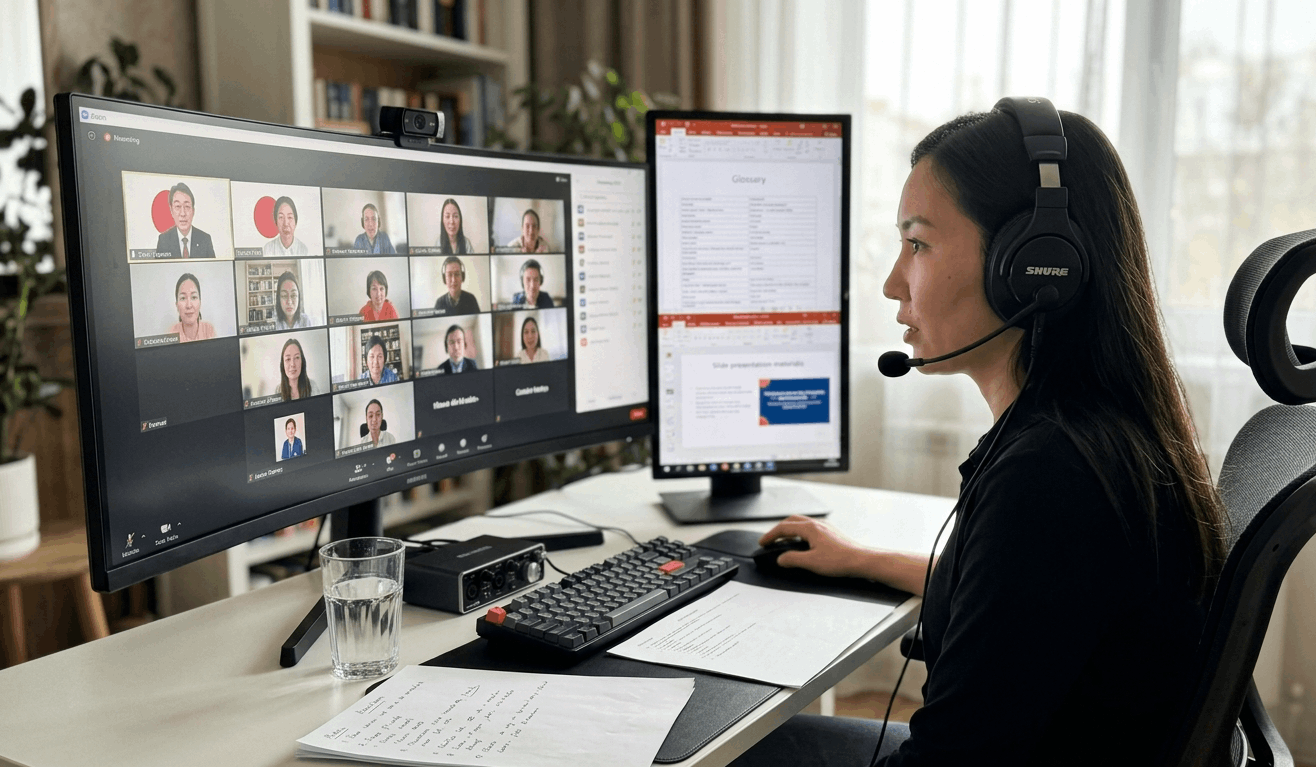
When choosing a specialist, it's important to consider not only language proficiency but also experience working in an online format. The translator should understand platform specifics, be able to work with technical settings, and adapt to remote communication.
It is also important to discuss the translation format in advance - simultaneous or consecutive - and to provide materials for preparation. This will ensure a high-quality result.
If you need an interpreter for an online meeting in Kazakhstan, you should choose a specialist with experience in international negotiations and an understanding of the business context.
Online translation is a convenient and effective tool for international communication, if the process is organized correctly. It requires attention to technical details, clear interaction between participants, and a professional approach from the translator.
With proper preparation, online interpreting services allow for high-quality communication and the successful conduct of negotiations, conferences, and meetings remotely.